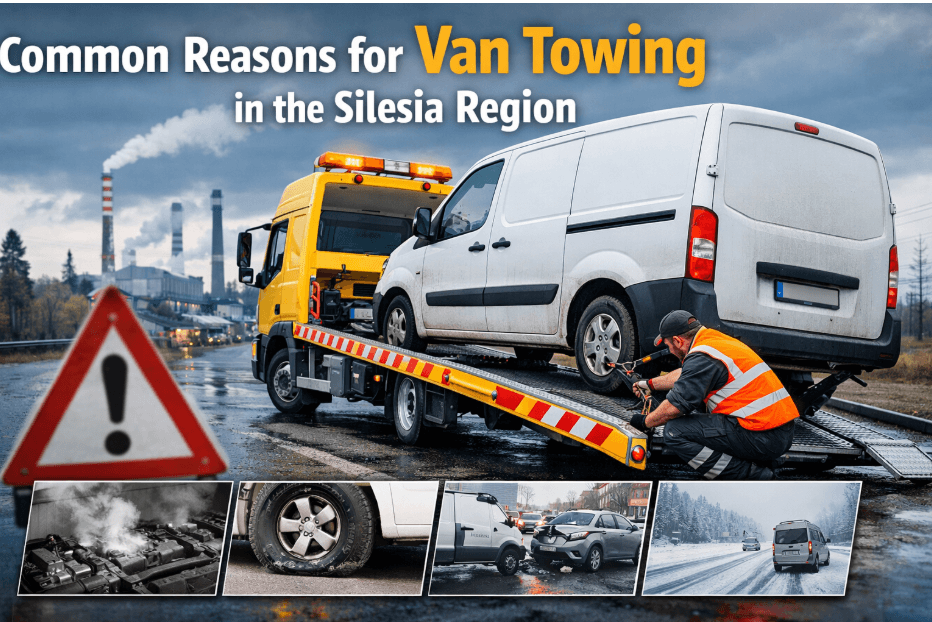
The Silesia region is one of the busiest parts of Poland for transport, delivery services, trade, and local mobility. Vans are everywhere, from courier fleets and construction vehicles to family-owned service businesses that depend on reliable transport every single day. When one of these vehicles suddenly stops working, the impact can be immediate and expensive. In many of these cases, professional holowanie aut dostawczych BUS becomes the safest and fastest solution. Understanding why vans most often need roadside help in this region can help drivers prepare better, reduce downtime, and make smarter decisions when trouble appears.
Heavy daily use and long working hours
One of the biggest reasons vans require towing in Silesia is simple: they work hard. Unlike private cars, vans are often on the road from early morning until late evening. Many are used for deliveries, technical services, catering, moving jobs, and supply runs between cities. This constant movement adds pressure to every mechanical part.
A van that covers large distances every week experiences wear much faster than a normal passenger vehicle. Brakes, suspension components, wheel bearings, clutches, and gearboxes all take more punishment. Even drivers who service their vehicles regularly cannot fully prevent the effects of heavy daily use. Over time, minor issues grow into major failures, and towing becomes necessary when the van can no longer continue safely.
In urban and industrial parts of Silesia, where traffic is dense and stop-start driving is common, this wear becomes even more intense. Vehicles are forced to accelerate, brake, turn, and idle more often, which shortens the life of key systems.
Engine breakdowns on busy roads
Engine trouble remains one of the most common causes of van towing across the region. Vans often carry tools, products, or heavy cargo, and that extra load makes the engine work harder. If the cooling system, fuel system, or timing components are not in top condition, a sudden breakdown can happen without much warning.
Common engine-related problems include:
- overheating during long drives or in traffic
- turbocharger failure
- injector or fuel pump issues
- snapped timing belts or chain problems
- loss of oil pressure
- electrical faults affecting ignition or engine management
These failures can leave a van stranded in the middle of a route, in a company parking area, or even on a motorway. Because continuing to drive with engine trouble can cause far greater damage, towing is often the most responsible option.
In Silesia, where roads connect busy cities and industrial zones, a broken-down van can quickly create both safety and logistical problems. That is why fast response matters so much for business owners and drivers alike.
Flat batteries and electrical system faults
Battery failure is another frequent reason for roadside assistance and towing. This issue is especially common in colder months, but it can happen at any time of the year. Vans used for short trips are particularly vulnerable because the battery may not have enough time to recharge properly between stops.
Electrical problems are also common in modern vans because they rely on many connected systems. A fault in the alternator, starter, wiring, onboard computer, or sensors can make the vehicle impossible to start or unsafe to drive. For commercial drivers, this is more than a minor inconvenience. A failed delivery route or missed appointment can mean financial losses and unhappy customers.
Older vans in the region are especially exposed to these issues. Many small businesses continue using vehicles for years to keep operating costs down, but age brings a higher risk of electrical failure. When a van refuses to start or loses power unexpectedly, towing is often the only realistic solution.
Tyre damage and wheel-related incidents
Road conditions play a major role in towing cases. Although many roads in Silesia are modernized and well connected, drivers still encounter potholes, sharp debris, damaged curbs, and uneven surfaces. Vans, especially when loaded, place extra stress on tyres and wheels. A sudden puncture or blowout can be dangerous, especially at higher speeds.
Wheel-related towing incidents often happen because of:
- punctured or shredded tyres
- damaged rims
- broken wheel bolts
- suspension damage after impact
- misalignment that makes further driving risky
A van with cargo or passengers cannot always be repaired safely on the spot. Even when the visible problem seems limited to the tyre, there may be hidden damage underneath. This is why towing is sometimes chosen even after what seems like a simple roadside incident.
Clutch and gearbox failures in city traffic
Driving a van through city traffic is demanding. Frequent gear changes, traffic jams, hill starts, and heavy loads put enormous pressure on the transmission system. In the Silesia region, where cities blend into one another and business traffic is constant, this problem appears often.
Clutch wear is especially common in delivery vans. Drivers stopping dozens of times per day place repeated strain on the vehicle. Over time, the clutch may begin slipping, the pedal may lose resistance, or the gearbox may become difficult to use. In more serious cases, the vehicle may refuse to move at all.
When the transmission fails, drivers usually have no safe way to continue the trip. At that point, using Laweta Siemianowice Slaskie can help move the vehicle quickly to a workshop without increasing the damage. This is particularly important for local companies that cannot afford long interruptions in transport operations.
Road accidents and minor collisions
Not every towing job follows a dramatic accident. In fact, many vans need towing after relatively minor collisions. A bent wheel, damaged axle, broken headlight assembly, deployed airbag system, or leaking fluid may be enough to make further driving impossible.
The Silesia region has high traffic density in many areas, and that naturally increases the chance of accidents. Commercial drivers often work under time pressure, move through unfamiliar streets, or park in narrow urban spaces. Even a small mistake from another road user can leave a van unfit for the road.
After a collision, towing is often the safest next step because it protects both the driver and the vehicle. Trying to continue driving with unseen structural or suspension damage may turn a manageable repair into a serious mechanical problem.
Overloading and stress on vehicle components
Another common issue is overloading. Many van owners try to maximize every trip, especially when fuel prices, time pressure, and customer expectations are all factors. But when a van regularly carries more than it should, the entire vehicle suffers.
Excess weight affects:
- brakes
- tyres
- suspension
- steering
- cooling system
- transmission
At first, the van may still seem functional. But over time, the added strain leads to failures that can happen on the road with no convenient warning. A broken suspension spring, overheated brakes, or gearbox failure may leave the vehicle immobile. In a region with active trade and transport activity like Silesia, this remains a very real and recurring reason for towing.
Weather conditions and seasonal challenges
Weather also has a strong influence on van towing demand. Winter in Silesia can bring snow, ice, low temperatures, and reduced visibility. These factors increase the risk of skidding, battery failure, frozen components, and starting problems. Even experienced drivers can lose control or find themselves stuck in difficult road conditions.
Rainy periods create a different set of dangers. Wet surfaces increase braking distance and reduce tyre grip. Flooded roads can damage engines, electronics, and braking systems. A van that drives through deep water may suffer immediate failure or serious internal damage that only becomes clear later.
Seasonal transitions are often overlooked as well. Drivers may delay replacing tyres, skip fluid checks, or assume the vehicle is ready for changing road conditions when it is not. As a result, towing services become essential during periods when weather shifts quickly.
Fuel mistakes and driver-related issues
Not all towing cases happen because of technical failure. Sometimes the reason is human error. Misfuelling, running out of fuel, locking keys inside the van, or ignoring early warning signs can all lead to roadside trouble. Commercial drivers under pressure may postpone repairs, continue with dashboard warnings, or hope the problem will disappear after one more trip.
This is understandable, but risky. A warning light that seems minor in the morning can become a major breakdown by afternoon. In a van used for business, small delays often create a chain of larger problems, including missed jobs, disappointed clients, and added repair costs.
What smart van owners should keep in mind
Van towing in the Silesia region is common not because drivers are careless, but because these vehicles operate under real pressure every day. They carry heavy loads, cover demanding routes, face variable weather, and spend long hours in traffic. Breakdowns are often the result of accumulated strain rather than one sudden mistake.
The best way to reduce towing risk is to stay proactive. Regular inspections, proper loading, seasonal preparation, and quick reaction to unusual sounds or warning lights can make a real difference. Still, even with good maintenance, some situations cannot be avoided. When that happens, fast and professional assistance is what protects both the vehicle and the business depending on it.
For drivers, fleet operators, and local entrepreneurs, knowing the most common reasons for van towing is not just practical knowledge. It is part of keeping transport reliable in one of Poland’s most active and demanding regions.