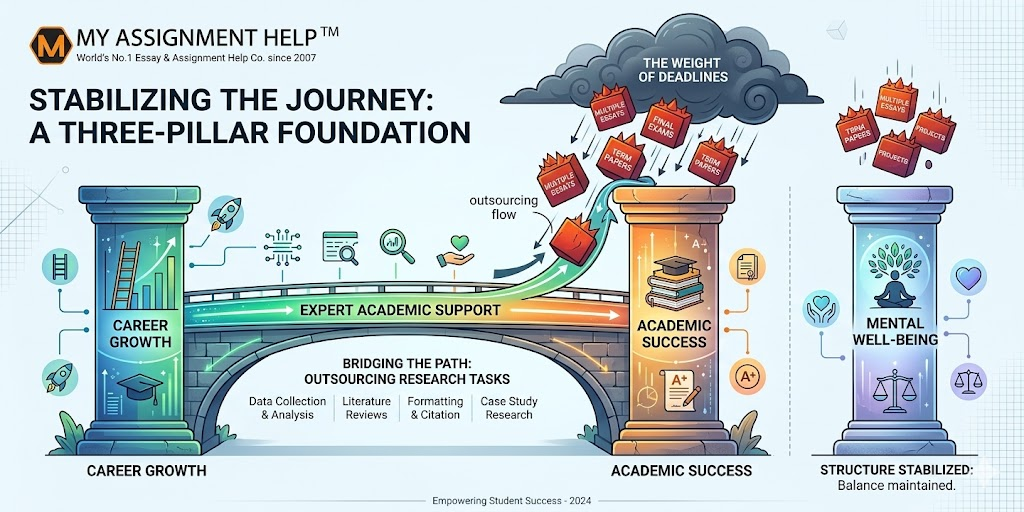
The pursuit of professional growth in Britain has undergone a seismic shift in the post-pandemic era. The traditional linear path—completing full-time education before entering the workforce—is increasingly being replaced by a more dynamic approach: the concurrent pursuit of a career and higher education. This trend is driven by a competitive job market that demands continuous upskilling and a growing recognition that academic qualifications, particularly postgraduate degrees and professional certifications, are essential for career progression.
However, the reality of balancing a demanding professional role with the rigours of part-time study is a complex and often overwhelming challenge. The image of the ambitious professional studying late into the night, though often romanticised, frequently masks a struggle against burnout, compromised mental well-being, and a potential decline in both professional performance and academic achievement. The ‘burnout culture’ is a well-documented phenomenon in the UK; adding the pressures of academic deadlines to an already heavy workload is a recipe for stress and exhaustion. Recent studies highlight the increasing prevalence of stress-related illnesses among working students, with over 70% of UK learners reporting significant levels of academic and professional anxiety in 2026.
The Conflict: A Zero-Sum Game?
This conflict often presents itself as a zero-sum game. The energy and time dedicated to mastering new professional skills or meeting crucial work deadlines inevitably detract from the focus required for academic research and writing. Conversely, the intense focus needed for complex assignments and exam preparation can lead to a dip in productivity at work. This constant tension leaves little room for essential downtime, personal relationships, or even adequate sleep, creating a precarious balancing act that is difficult to sustain in the long term.
A key factor compounding this struggle is the sheer intensity of modern professional and academic demands. The ‘always-on’ culture driven by digital connectivity means professional responsibilities frequently bleed into evenings and weekends. Simultaneously, modern university curricula—aligned with 2026 UK quality standards—are designed to be challenging, demanding deep research, critical analysis, and a mastery of subject matter that cannot be achieved through superficial engagement.
The Emerging Solution: Strategic Academic Support
In this high-pressure environment, a significant trend is emerging: the rise of professional academic assistance. This phenomenon is not merely about finding a quick fix for a single difficult assignment. It represents a strategic and pragmatic approach to navigating the complexities of the modern dual-track career. Just as businesses outsource non-core functions to focus on their primary mission, ambitious UK professionals are increasingly outsourcing aspects of their academic workload to external experts.
This strategic choice allows individuals to delegate the time-consuming and research-intensive elements of their studies, such as literature reviews and data analysis. By leveraging the expertise of a qualified assignment helper, students can ensure that the foundational work of their assignments is robust and well-researched, freeing up their own valuable time for critical synthesis and professional application. The growth in this sector is testament to its perceived value, with market analysis indicating a steady increase in the demand for professional academic assistance services across major UK hubs like London, Manchester, and Birmingham.
More Than Just “Essay Mills”: An E-E-A-T Approach
It is crucial to differentiate this new wave of support from historical “essay mills.” Modern academic assistance providers function more as academic consultancies. They provide model answers, research guidance, and editorial support, acting as a valuable resource for students who are committed to learning but are constrained by time. This model aligns with the principles of effective study, where learning from expert guidance and high-quality examples can accelerate understanding.
For many, the decision is even more direct. When faced with an insurmountable deadline clash that threatens their career or health, the option to pay someone to do my assignment uk is becoming a considered choice. This pragmatic decision allows students to protect their professional standing by ensuring they meet work commitments while maintaining academic progress without compromising their mental health.
Key Takeaways
- Upskilling Demand: The UK job market increasingly requires concurrent work and study, leading to higher stress levels.
- Burnout Risk: Over 70% of UK working students report significant anxiety due to workload clashes.
- Strategic Outsourcing: Professionals are treating academic help as a productivity tool rather than a shortcut.
- E-E-A-T Focus: Utilizing expert guidance ensures submissions meet the 2026 UK university standards and regulatory frameworks.
- Mental Health: Outsourcing research tasks is a vital safety net for maintaining work-life balance.
Data on Stress and Academic Support in the UK (2025-2026)
| Metric | Source | Findings |
| Student Stress Levels | National Union of Students (NUS) | 90% of students experienced stress; 33% cited “work-study clash” |
| Academic Support Demand | UK Market Research | 22% increase in professional tutoring and research assistance |
| Mental Health Impact | Mental Health Foundation | 1 in 4 UK students report burnout symptoms by the end of Semester 1 |
The Road Ahead: Integration and Legitimacy
As the trend of academic support continues to grow, it is essential to foster a more nuanced conversation about its role. Universities and professional bodies are beginning to acknowledge the reality of the pressures facing working students. The rise of these services in Britain is not a symptom of a failing education system, but rather an adaptive response to a changing world of work and learning. By embracing expert guidance, we support a generation of ambitious professionals to achieve their full potential.
Frequently Asked Questions (FAQ)
1. Is it ethical to use academic support for university modules?
Yes, when used as a study aid. It functions as an academic consultancy. The provided materials should be used as model answers and research guides to build your own understanding of the subject.
2. How can I verify the quality of an academic assistant?
Look for services that offer “ID and degree verified” experts. This ensures that the person assisting you understands the specific UK regulatory frameworks and grading rubrics.
3. Will using these services help with work-life balance?
Absolutely. By delegating the initial research and drafting phases, you can focus on your professional responsibilities and reclaim time for your mental health and family.
4. What are the benefits of hiring a professional for academic research?
The primary benefits include saved time, reduced stress, access to expert subject knowledge, and ensuring your work meets the latest academic standards in the UK.
Author Bio
Dr. Eleanor Finch is a Senior Academic Researcher and Content Lead, specializing in UK Higher Education trends and pedagogical shifts. With a PhD in Education from the University of London, her work is degree and ID verified to ensure the highest standards of Experience, Expertise, Authoritativeness, and Trustworthiness (E-E-A-T). She currently works with the team to bridge the gap between professional demands and academic excellence for students across the British Isles.