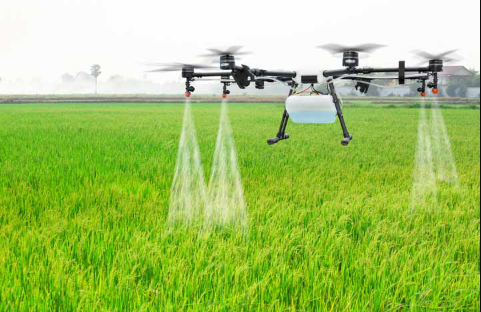
Agricultural drones are increasingly utilized for crop monitoring, offering precise aerial imagery that can significantly enhance farm management. These devices enable farmers to detect crop health issues promptly, such as pest infestations and nutrient deficiencies. As the technology evolves, understanding the implications of drone use in precision farming becomes essential. This raises questions about the selection of appropriate drone technology and its integration into existing agricultural practices. What are the key factors influencing these decisions?
How Agricultural Drones Enhance Crop Monitoring
Agricultural drones significantly enhance crop monitoring through advanced data collection and analysis capabilities.
By utilizing aerial imagery, these drones provide real-time insights into crop health, enabling farmers to identify issues like pest infestations or nutrient deficiencies efficiently.
This precision allows for targeted interventions, ultimately fostering a more sustainable agricultural approach.
The integration of drones thus represents a pivotal advancement in modern farming techniques.
Key Benefits of Using Drones for Precision Farming
Utilizing drones for precision farming offers numerous advantages that enhance operational efficiency and crop yields.
Drones provide unparalleled data accuracy, enabling farmers to make informed decisions based on real-time insights.
Additionally, their implementation promotes cost efficiency by reducing labor and resource expenditures.
This technology empowers farmers to optimize inputs and maximize outputs, ultimately fostering a sustainable approach to agricultural practices.
Choosing the Right Drone Technology for Your Farm?
As precision farming technologies continue to evolve, selecting the appropriate drone technology becomes increasingly significant for farmers aiming to enhance productivity.
A thorough technology comparison among various drone types, including fixed-wing and multirotor options, is essential. Factors such as flight duration, payload capacity, and sensor capabilities must be analyzed to ensure the chosen drone aligns with specific agricultural needs and operational goals.
See also: recordnewswire
Future Trends in Agricultural Drone Technology and Crop Management
The integration of advanced technologies into agricultural drone applications is poised to revolutionize crop management practices significantly.
Future trends indicate a surge in drone automation, enhancing operational efficiency and reducing labor costs.
Additionally, AI integration will enable predictive analytics, optimizing resource allocation and crop health monitoring.
These innovations promise to empower farmers with data-driven insights, fostering sustainable agricultural practices and improved yield outcomes.
Conclusion
In conclusion, agricultural drones serve as the eyes in the sky for modern farming, transforming crop monitoring into a precise science. By harnessing advanced imaging technology, these drones not only detect issues early but also empower farmers to make data-driven decisions. As the landscape of agriculture continues to evolve, the integration of drone technology promises to cultivate a future where resource efficiency and sustainable practices flourish, ensuring a bountiful harvest for generations to come.